

Proper installation is vital for vacuum circuit breakers. Below we cover the complete installation steps and critical safety precautions. Avoid common mistakes during on-site installation to ensure stable and safe operation of your switchgear.
The installation steps and precautions for vacuum circuit breakers are as follows:
Installation Steps
1. Inspection and Preparation:
- Before installation, conduct a visual and internal inspection of the vacuum circuit breaker to ensure that the vacuum interrupter, components, and assemblies are complete, qualified, undamaged, and free of foreign objects.
- Check the list of goods to ensure that all attachments are complete.
- The workstation equipment and tools used for installation must be clean and meet the assembly requirements.
2. Installation location selection:
- Choose an installation location with fresh, dry air, no corrosive gases, and conductive dust.
- The installation ground should be flat, dry, and free from corrosive liquids,and heavy dust.
- The ambient temperature during installation should be between -25 ℃ to +40 ℃, and special requirements for low or high temperature situations should be specified.
3. Formal Installation:
- Strictly follow the installation process regulations, and the specifications of fasteners for each component installation must be selected according to the design specifications.
- Check the distance between poles, and ensure that the distance between the upper and lower output lines meets the requirements of relevant professional technical regulations.
- The length specification of the bolt fixing the fixed contact end of the vacuum interrupter cannot be mistaken.
- The sliding parts should move freely after assembly, and lubricating grease should be applied to the friction areas during movement.
- The general installation sequence is: front part (skeleton in place → post insulator → horizontal insulator → bracket → lower busbar → vacuum interrupter and parallel isolation line) → upper part → rear part.
4. Adjustment and Testing:
- According to the relevant regulations of vacuum circuit breaker products, adjust the three-phase synchronization, opening and closing speed, and closing bounce.
- Adjust the closing and opening gaps to minimize the difference between them.
- Adjust the opening spring and contact stroke to obtain the appropriate closing and opening speed.
- After completing the adjustment, re measure and correct the opening distance and contact stroke of each pole.
- Perform overall installation and commissioning, clean and wipe after passing the inspection, mark the adjustable connection parts of each component with red paint, and apply anti-corrosion grease to the wiring of the output terminal.
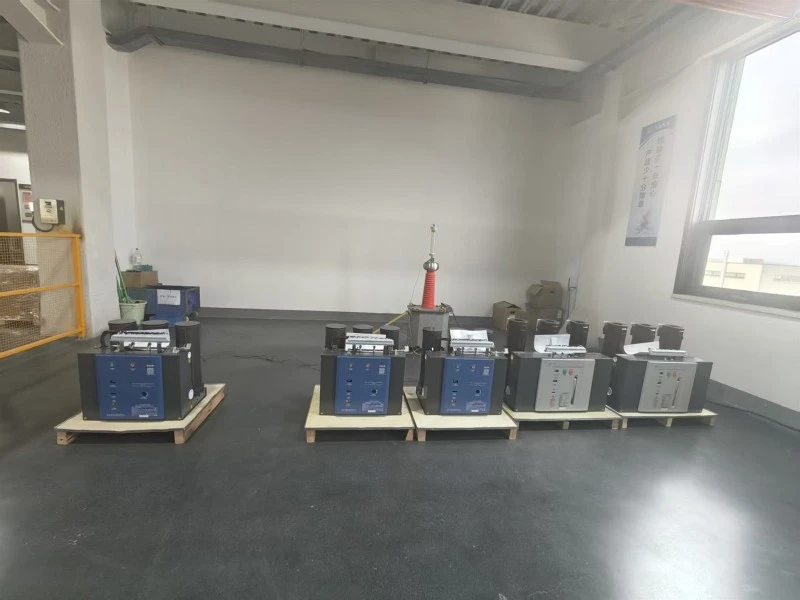
Precautions
1. Safety precautions during installation:
- Before installing equipment, safety isolation should be carried out and confirmed with on-site personnel.
- During the installation, avoid using inappropriate tools, especially when tightening screws near the vacuum interrupter, do not use adjustable wrenches.
2. Operation and maintenance:
Operators should carefully read the instructions and strictly follow the instructions for operation.
After a certain period of use, the vacuum circuit breaker should undergo maintenance to ensure the long-term stable and reliable operation of all components.
3.Testing and Recording:
- All tests conducted on vacuum circuit breaker shall comply with the requirements of relevant national standards, and the test data shall be recorded and saved.
- After assembly, insulation tests shall be performed on both new equipment and equipment with maintenance records following national test methods.
4. Commissioning Test
After the installation and adjustment are completed, the commissioning test should be carried out as soon as possible to promptly identify and solve problems.
5. Closing Bounce Problem:
- Vacuum circuit breaker may occur contact bounce during the closing , which may be caused by excessive rigidity of the closing impact, poor guidance of the moving contact rod, excessive clearance between transmission links, or poor perpendicularity between the contact plane and the central axis.
- For the problem of closing bounce, adjustments should be made according to specific circumstances, such as adjusting the contact spring and the installation position of the vacuum interrupter.
6. Operating Environment:
Avoid using vacuum circuit breaker in harsh environments such as humidity, corrosive gases, or conductive dust to avoid affecting their performance and lifespan.
In summary, the installation of vacuum circuit breaker requires following certain procedures and precautions to ensure their normal operation and long-term use. During the installation, it is necessary to strictly follow the operating procedures and adhere to the principles of safety production.

Professional Vacuum Circuit Breaker Factory in China
We are a professional vacuum circuit breaker factory with over 20 years of R&D and manufacturing experience. We strictly follow IEC standards for production and testing, supply complete VCBs as well as core spare parts, and support OEM & ODM customization.