

I. Introduction
In factory power supply and distribution systems, overvoltage protection for 10kV metal-clad withdrawable switchgear is a critical concern. Lightning strikes, switching operations, and system faults can all produce transient overvoltages in the power system. If left unchecked, these overvoltages can range from accelerated insulation aging to outright damage of switchgear, instrument transformers, and even busbars. (This article focuses on surge arresters used in high-voltage complete sets of equipment.) Now let's take a look from its structure, working principle, installation and maintenance.
The surge arresters used in switchgear are almost exclusively Zinc Oxide Surge Arrester(MOA,Metal Oxide Arresters), which serve as essential protective components for limiting overvoltage and ensuring the safe operation of high-voltage switchgear equipment. Thanks to their superior performance and simple construction, they have largely replaced conventional silicon carbide (SiC) arresters.

II. Structural Composition of Zinc Oxide Arresters
The core of a zinc oxide arrester is the ZnO varistor block, which consists of a large number of zinc oxide grains connected through metal electrodes at both ends and encapsulated in an insulating housing (porcelain bushing or composite insulation).
Typical structural diagram:

III. Working Principle
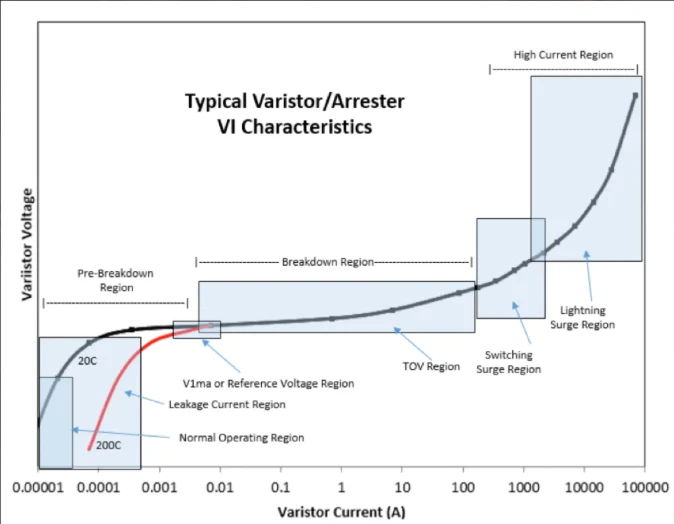
The most distinctive feature of a zinc oxide surge arrester is its highly nonlinear voltage-current (V-I) characteristic.
- During normal operation:
At the system's rated voltage, the ZnO varistor presents extremely high resistance, allowing only microampere-level resistive leakage current to flow-a negligible effect on system operation.
- When overvoltage occurs:
When lightning impulses or switching overvoltages cause voltage to rise rapidly, the resistance of the ZnO varistor drops sharply. The arrester conducts instantaneously, diverting the surge current to earth.
- After overvoltage subsides:
Once voltage returns to normal, the varistor resistance rises rapidly, and the arrester automatically restores to its high-resistance state-no manual intervention required.
Working process diagram:
IV. Installation Locations of Zinc Oxide Surge Arresters in High-Voltage Switchgear
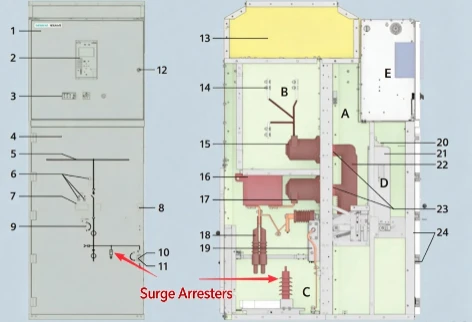
In high-voltage switchgear, zinc oxide surge arresters are typically installed close to the equipment being protected. Common configurations include:
- Busbar-side surge arresters
- Ahead of voltage transformers (VTs)
- Inside transformer incoming cabinets
- Installation location of zinc oxide surge arresters in metal-clad switchgear
- Photograph of zinc oxide arrester installation in switchgear
V. Advantages of Zinc Oxide Surge Arresters
Compared with conventional arresters, zinc oxide surge arresters offer the following advantages:
- No series gap, fast response speed
- Low residual voltage (discharge voltage), high protection level
- Strong energy handling capability
- Low maintenance workload, high operational reliability
For these reasons, zinc oxide surge arresters have become the standard configuration for overvoltage protection in high-voltage switchgear.
VI. Key Points for Operation and Maintenance
In actual operation, the following issues should be closely monitored:
- Periodically inspect the appearance for cracks and discharge traces
- Monitoring of the resistive leakage current (or third-harmonic component) to assess varistor aging
- Reliable earthing/grounding, with grounding resistance within specified limits
VII. Summary
Zinc oxide arresters are indispensable protective components in high-voltage switchgear cubicles. Through their excellent nonlinear characteristics, they effectively limit lightning overvoltages and switching overvoltages, ensuring the safe and stable operation of power equipment and systems.